

★ Bestseller
05.09.2026
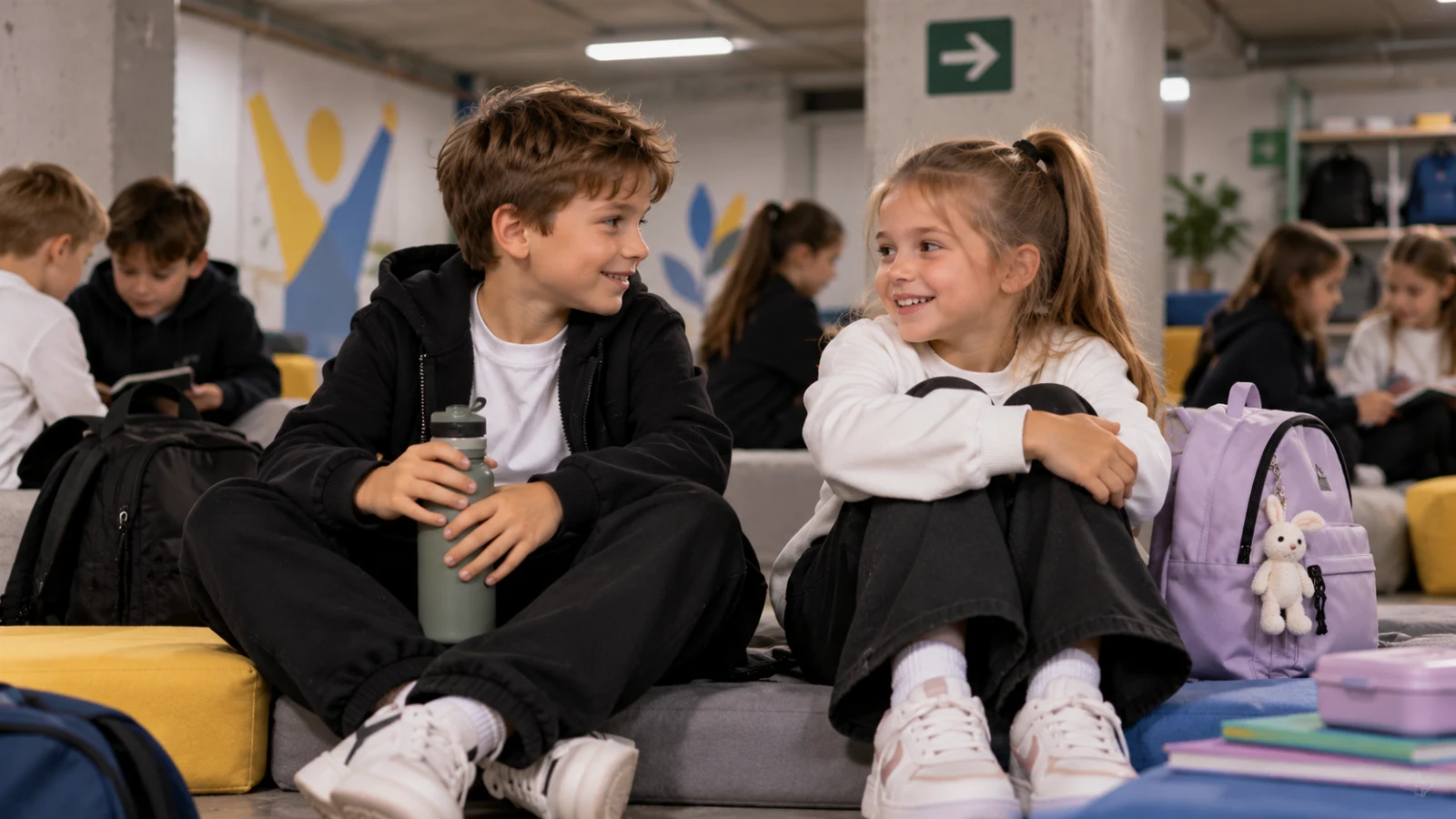
What to dress your child in for school and kindergarten shelters: comfortable, warm, and clutter-free
A few years ago, when getting a child ready for school in September, we thought something like this:
It's +15 outside. It's warm in the classroom. So, a t-shirt, pants, and a sweater on top — done.
Now, Kyiv parents have another point to consider:
What if they have to spend several hours in a shelter today?
Unfortunately, this is no longer an abstract question.
The start of the 2026 school year in Kyiv coincided with a period of very long air raid alerts. Sirens sound during the day, classes are interrupted, and some lessons effectively take place in shelters.
We cannot predict how long the next alert will last.
But we can do one simple thing — dress the child so they are as comfortable as possible, regardless of where the lesson takes place today.
The most convenient principle for school and kindergarten in autumn is layering.
Not one huge, warm sweater that leaves the child feeling hot in the classroom, but several items that are easy to take off or put on.
For example:
t-shirt + sweatshirt;
long-sleeve shirt + zip-up cardigan;
turtleneck + cardigan;
t-shirt or polo + hoodie;
blouse + cardigan.
It's warm in the classroom — take the cardigan off.
It's cooler in the shelter — put it on.
It sounds elementary, but this system works best when a child moves between warm and cool rooms several times during a single school day.
This is especially important for kindergarten and primary school.
If a group or class needs to move to a shelter in an organized manner, clothing shouldn't turn into a separate quest.
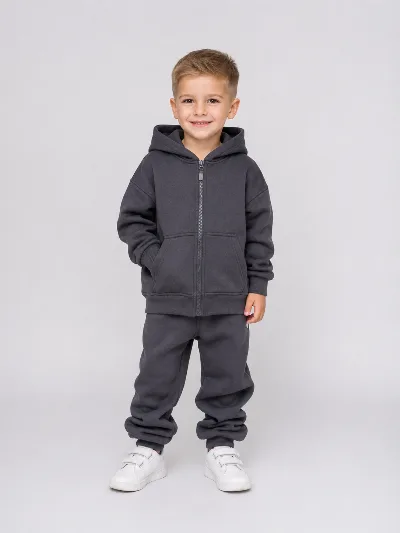
Therefore, for young children, the following are convenient:
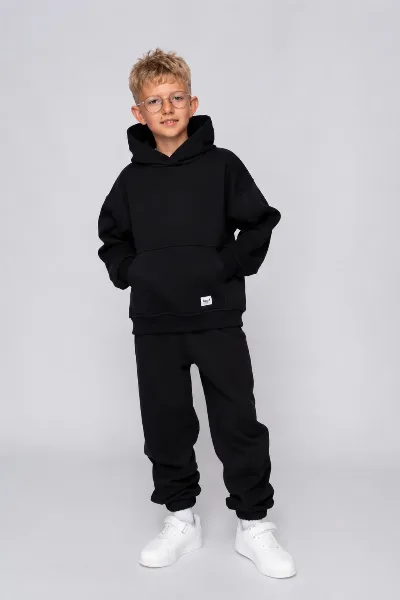
sweatshirts;
hoodies;
cardigans;
zip-up sweaters;
pullovers without complicated fasteners.
It is ideal if the child can quickly put on and take off the item themselves.
This is generally a good test for primary school clothing.
Give the child a sweater and ask them to put it on without help.
Did it work? Great.
If you spend five minutes looking for the right sleeve and then struggle with a zipper — perhaps it's worth finding a simpler option for school.
The rule here is roughly the same: the child should be comfortable sitting for a long time and able to move easily.
For younger children, these work well:
knit pants;
straight-leg pants with an elastic waistband;
joggers;
soft jeans;
school pants with an elastic band.
For girls who wear school uniforms, you can combine a sundress with a turtleneck or long-sleeve shirt.
However, very stiff jeans, tight belts, or pants that look great standing in front of a mirror but make you want to unbutton them after an hour of sitting are not the best choice for a long school day.
And this applies not only to the shelter.
A child also spends many hours sitting at a regular desk.
Of course, no one has banned skirts.
But in cool weather, for days when a long stay in a shelter is possible, pants can be more practical.
If a girl loves skirts and sundresses, the problem is easily solved with thick tights or leggings.
Another good option is to leave a spare pair of warm leggings at school, if the facility allows keeping personal items.
We almost always remember the sweater.
We remember the feet much less often.
And that's a shame.
If the floor in the shelter is cool, good socks sometimes provide more comfort than an extra sweater.
That's why in autumn, it's worth packing a spare pair of socks for your child.
They take up almost zero space but can be very necessary if the child gets their feet wet on the way, spills water, or is simply cold.
For kindergarten, a spare pair is never a bad idea.
It depends on the specific facility.
In some places, children move to a shelter inside the building; in others, the route goes outside. In some shelters, it's quite warm, while in others, it's cool.
So, there is no universal rule here.
It is best to ask the teacher or class supervisor what the temperature is in your specific shelter and whether the children take their outerwear with them.
This is much more useful than trying to guess.
If the facility allows leaving personal items, you can put together a small spare set.
Not a suitcase for two weeks.
It is enough to have:
a t-shirt or long-sleeve shirt;
spare underwear for younger children;
socks;
light pants or leggings;
a warm sweater.
Pack everything in a separate labeled bag or a small pouch.
This is especially convenient for kindergarten and primary school.
And check the size periodically.
Because a child's spare set has a strange property: it can lie quietly for months, but when it's finally needed, it turns out the pants are already halfway up the shins.
For preschoolers, I would prioritize independence over the beauty of a complex outfit.
The child should find it easy to:
take off a sweater;
put it back on;
go to the bathroom;
adjust their pants;
change their shoes.
Therefore, a good outfit for a cool day can look quite simple:
t-shirt or long-sleeve shirt + soft pants + sweatshirt/sweater + comfortable shoes.
If you need to move to a shelter, there is no need to spend time buttoning, tucking in, or adjusting anything.
Here, another very serious factor is added.
"I'm not wearing that."
Especially from about 10–12 years old.
And there is no point in putting together a theoretically perfect set if the teenager leaves the warm cardigan at home because they absolutely hate it.
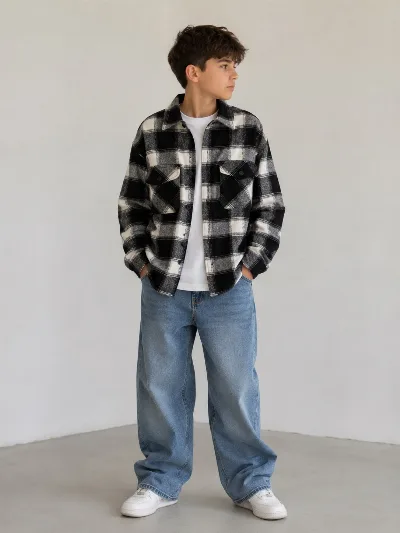
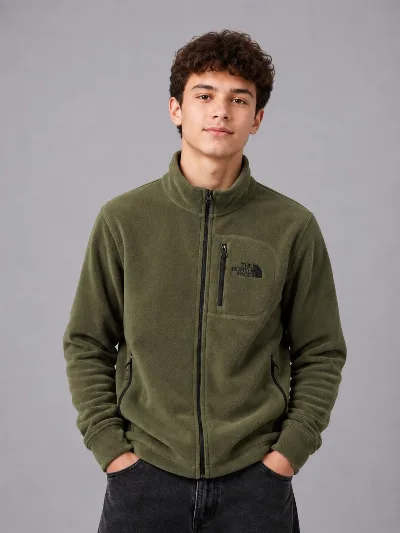
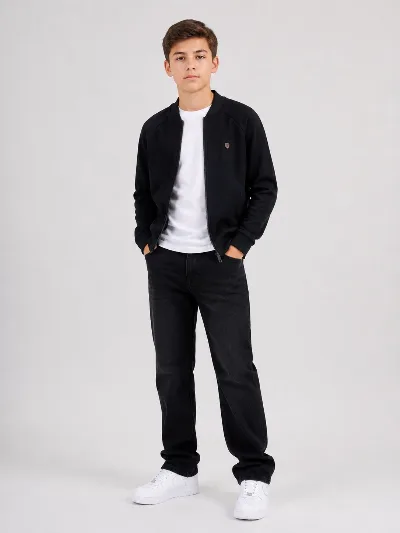
For older children, these work well:
basic long-sleeve shirts;
turtlenecks;
sweatshirts;
hoodies;
bomber jackets;
straight or wide-leg pants;
jeans;
sneakers and trainers.
In other words, standard modern casual wear that the child will wear with pleasure.
And that is much more useful than an ideal "correct" sweater that will spend the whole school year on a hanger.
This is the other extreme.
T-shirt, turtleneck, sweater, hoodie, vest...
And somewhere inside this layered pie is a child.
😁
The goal of layering is not to put on more.
The goal is to be able to regulate the temperature.
It is better to have two or three properly selected layers than one very warm outfit that cannot be adapted.
This is probably the most useful piece of advice in the entire article.
If the child was in a shelter today, just ask:
"Were you cold or hot there?"
Don't rely only on your own feelings.
One child is comfortable in a t-shirt at +18. Another is already looking for a blanket.
In a few days, you will quickly understand which set works for your child.
We would really like to write only about which skirt to pair with which blouse and which pants are currently in trend.
And we definitely will.
But today, Kyiv children might start a lesson in the classroom, continue it in a shelter, return back — and after some time, go down again. The capital's authorities state directly that schools must be prepared to change the format of education depending on the security situation.
We cannot make this not happen.
But we can take care of simple things.
So that nothing is tight.
So that feet don't get cold.
So that a sweater can be easily put on.
So that there are dry socks in the backpack.
So that the child is at least a little more comfortable.
Sometimes care is just that — very simple and practical.
At the SONECHKO store in Kyiv https://solnyshko.kiev.ua/, you can put together a comfortable layered set for kindergarten and school: t-shirts and long-sleeve shirts, turtlenecks, cardigans, sweatshirts and hoodies, knit and school pants, leggings, socks, and other children's clothing.
You don't have to buy separate "shelter clothes."
It is much more practical to choose regular items that the child will wear every day, but which are easily combined with each other and allow you to add or remove a layer.
You can order everything you need online or come to our store in Kyiv and try on the items with your child.
Take care of yourselves and your children. 💙
And may they need a warm sweater as often as possible simply because autumn has arrived.
More news

0 UAH